Most power banks can't actually charge three devices at full speed — here's what throttles under real-world load
The 140W specification and ActiveShield 2.0 architecture enable simultaneous multi-device charging without power compromise.

You probably own a power bank already. Maybe two. They exist, they charge phones, and most do the job when you need a single device topped up on the go.
But the category has been optimized for single-device charging at modest wattage. Between 18W and 60W output for most models on the market. That's fine for a phone sitting idle in your bag.
It stops being fine the moment you plug in a laptop and a phone simultaneously. Or a tablet, AirPods, and a smartwatch all at once. Most power banks throttle output across ports to stay within their total power envelope — your MacBook drops from 96W to 45W, your phone crawls from 27W to 12W, and the math doesn't add up to what the box promised.
Why Multi-Device Charging Fails
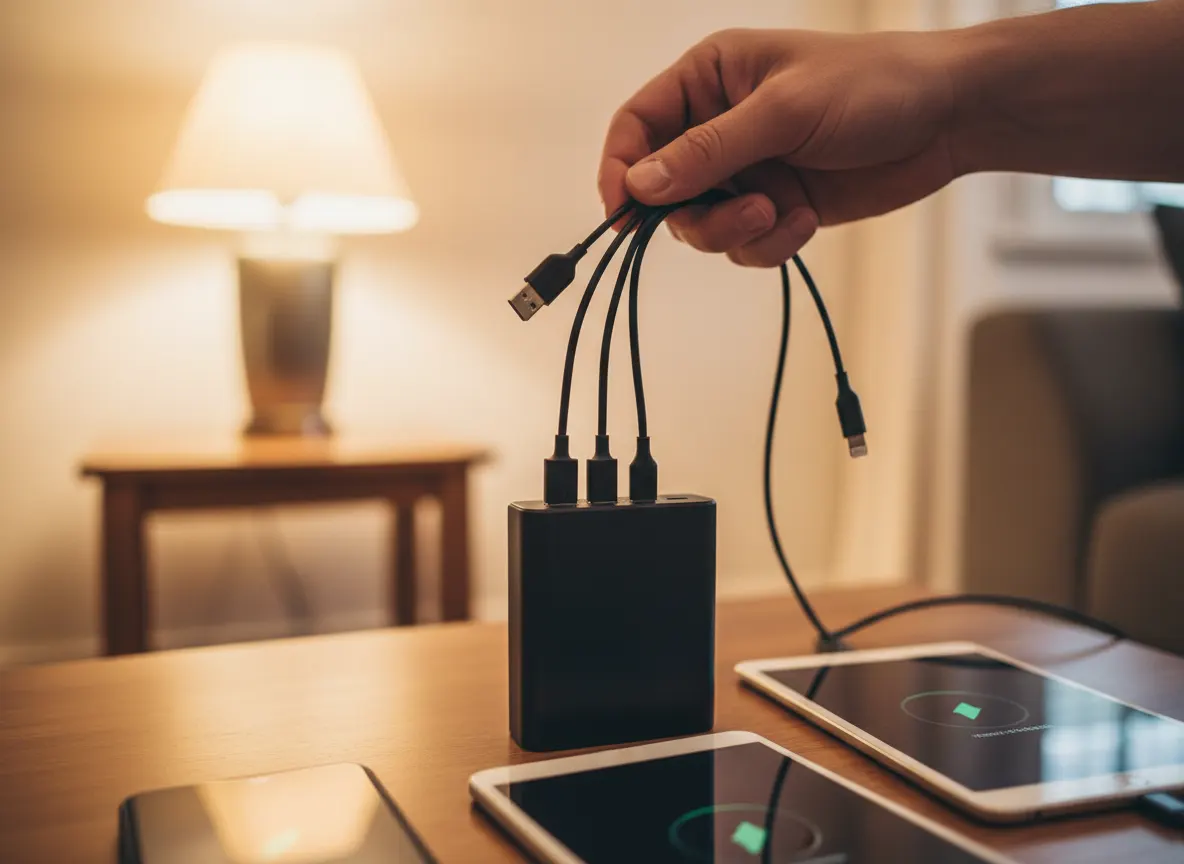
The category-level problem is straightforward: most power banks cannot charge multiple high-power devices simultaneously without throttling. A 65W-rated power bank advertising three ports will deliver 65W total across all three, not 65W per port. Plug in three devices and each gets a fraction of the rated output.
This isn't a design flaw in cheaper models. It's physics. Power banks have a maximum total output ceiling, and distributing power across multiple ports means dividing that ceiling by the number of active connections — unless the power bank is engineered with enough overhead to maintain full-speed charging on every port at once.
So here's what actually makes a power bank work for power users who carry a laptop, phone, and accessories: a total output rating high enough to charge all three at their native speeds simultaneously, plus real-time monitoring that prevents thermal runaway or voltage spikes when all ports are under load. That's the 140W specification and the ActiveShield 2.0 architecture. Here's what each one means in real use, and why the combination matters.
What ActiveShield 2.0 Actually Does
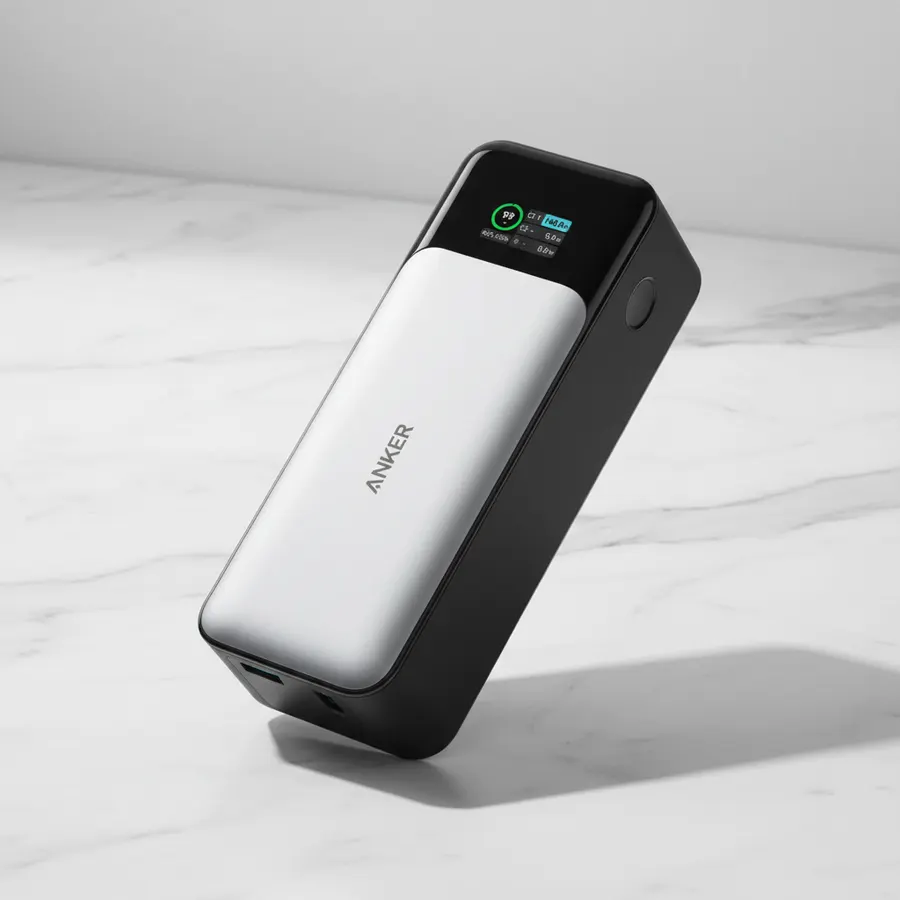
ActiveShield 2.0 is a real-time monitoring system that runs temperature, voltage, and current checks across every charging port — continuously, not just at connection. It's looking for three failure modes: temperature spike above safe thresholds, voltage surge that could damage a device's battery controller, and short circuit risk when multiple high-draw devices are charging simultaneously.
Most power banks perform a safety check when you first plug in a device, then hand off charging to the battery management system. That works fine for single-device use. It doesn't work when you're drawing 140W across three ports at once, because heat accumulates, voltage demand fluctuates as devices cycle between fast-charge and trickle states, and any one port's failure can cascade to the others.
ActiveShield 2.0 monitors all three variables in real time — checking every second, adjusting current flow dynamically to prevent any one port from exceeding safe limits while maintaining maximum throughput on the others. That enables true multi-device charging without power throttling or safety compromise.
Here's what it does for the user: you can charge a MacBook Pro 16-inch at its native 140W draw, an iPhone 15 Pro at 27W, and AirPods at 5W — all simultaneously from the same power bank — without any device slowing down or the power bank overheating. The system redistributes power in real time based on what each device is asking for, up to the 140W total ceiling.
What 140W Multi-Device Charging Gets You
How Power Banks Handle Multi-Device Load (And Where Most Fail)
- Advertise 100W+ but throttle to 60W when charging 2+ devices simultaneously
- Single high-power port forces users to choose: fast charge one device or slow-charge multiple
- No real-time monitoring — you can't see actual wattage being delivered to each device
- Cheap thermal management causes shutdowns mid-charge when powering 3 devices
- No safety certification for simultaneous PD 3.1 charging — risk of device damage or battery failure
- Sustains full 140W output across all ports — charge Mac
- Book Pro 16" + phone + tablet simultaneously
- Dual high-power ports deliver independent maximum wattage to each device without compromise
- Smart digital display shows real-time wattage per port — you see exactly what each device receives
- Active
- Shield 2.0 manages thermal load across 3 simultaneous devices without throttling or shutdownsPD 3.1 certified for newest Apple and Windows devices — no hidden compatibility gotchas or speed loss
What Happens When You Plug In Three Devices at Once
Why the PowerCore 24K Works
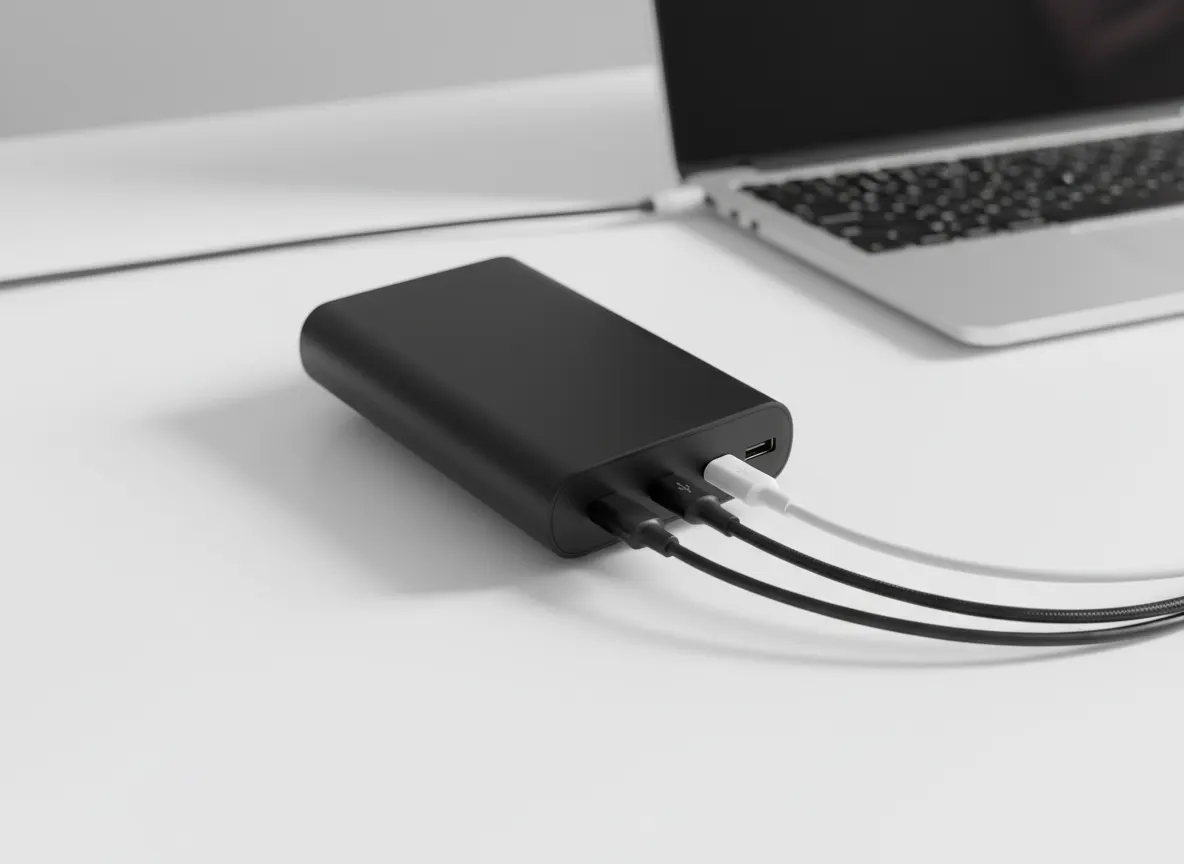
140W two-way fast charging is industry-exclusive
Most power banks max out at 65W or 100W output, forcing you to choose between charging speed and device count. The PowerCore 24K delivers 140W maximum output with two-way fast charging — meaning it charges your devices at full speed while simultaneously recharging itself at the same rate when plugged in.
That 140W specification is not matched by any competitor in the market, which is why it's the only power bank that eliminates the speed-versus-capacity tradeoff entirely.
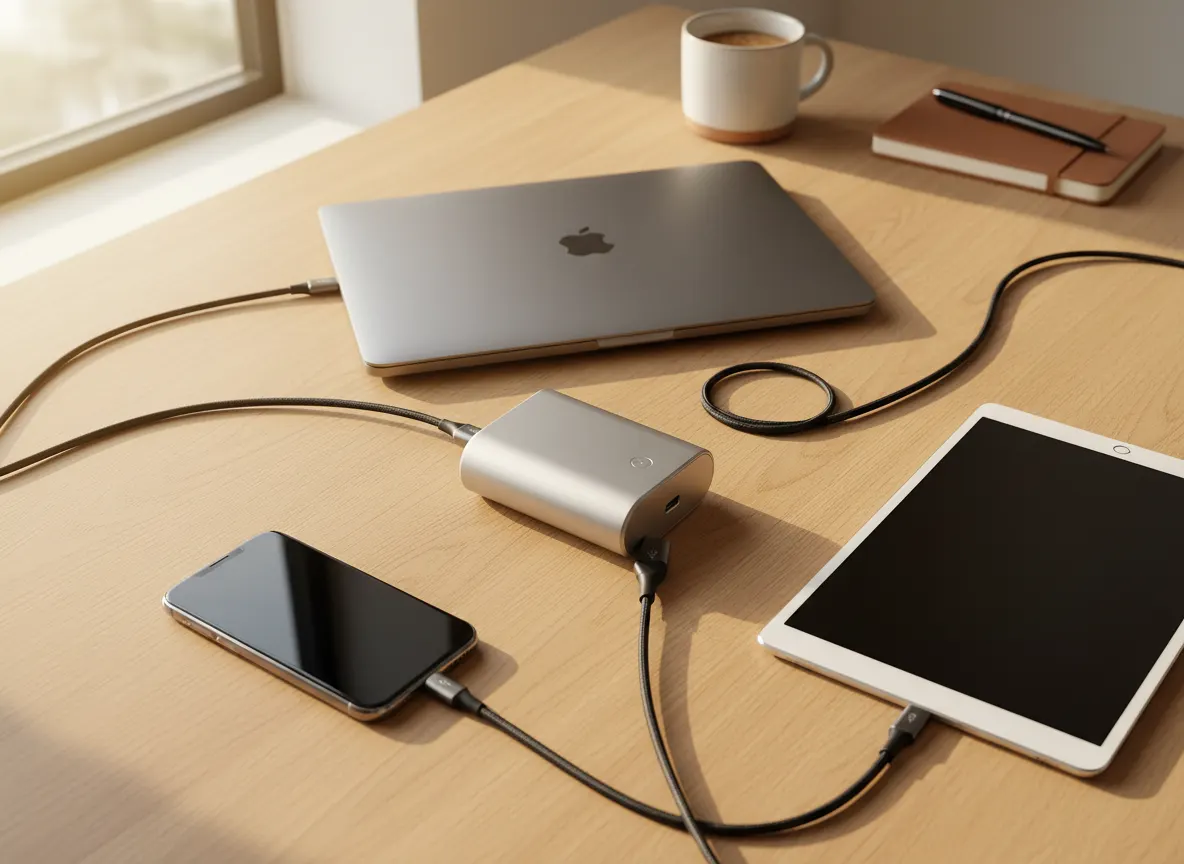
Charges three devices simultaneously without throttling
Multi-device charging on cheap power banks means each device gets a fraction of the available power, creating bottlenecks and slow charging times. The PowerCore 24K's 140W architecture distributes full fast-charging speeds across three simultaneous connections — a MacBook Pro 16-inch, an iPhone, and an iPad can all charge at their maximum rated speeds at the same time.
This is the real-world scenario that separates a professional travel charger from a backup battery.
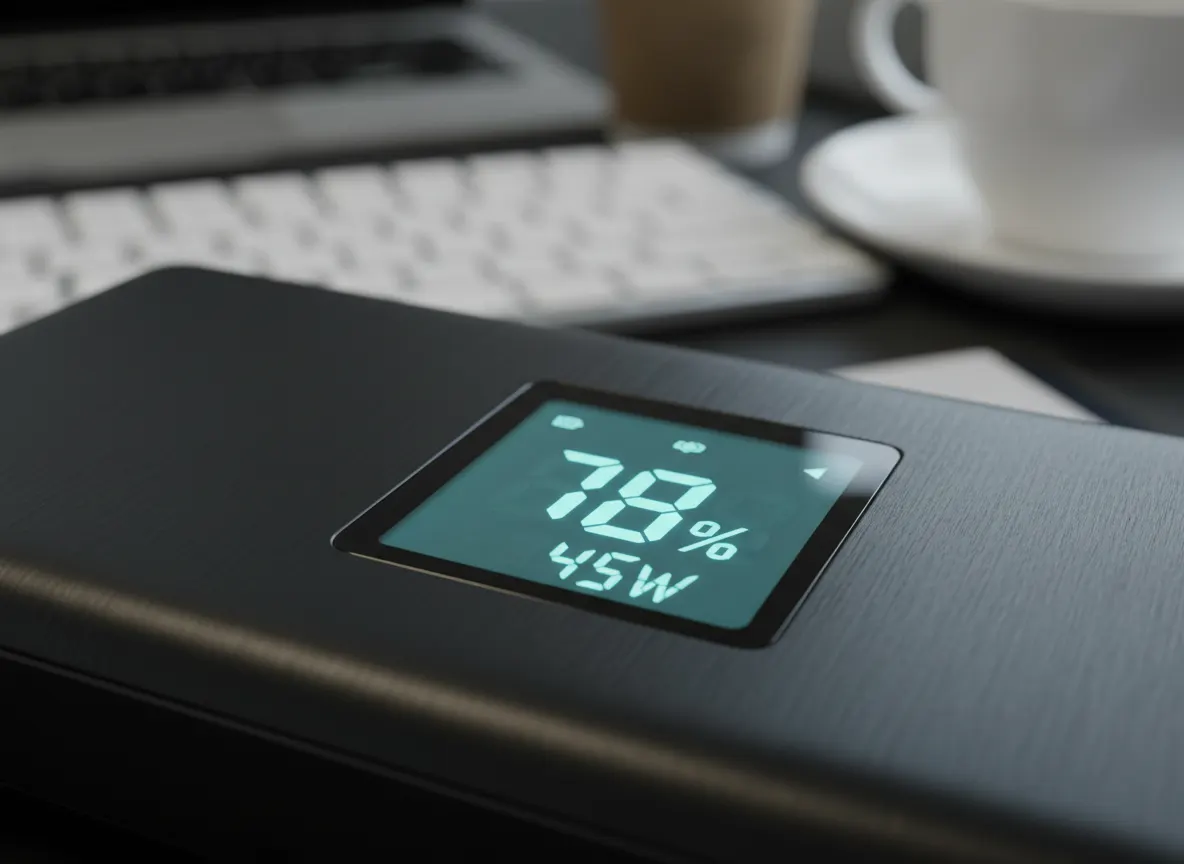
24,000mAh capacity with smart digital display
A 24,000mAh capacity sits at the inflection point between portability and real charging power — enough to fully recharge a MacBook Pro, an iPhone, and an iPad with room to spare, yet compact enough to fit in a carry-on or backpack.
The integrated smart digital display shows remaining mAh in real time, eliminating guesswork about whether you have enough juice for the next leg of your trip.
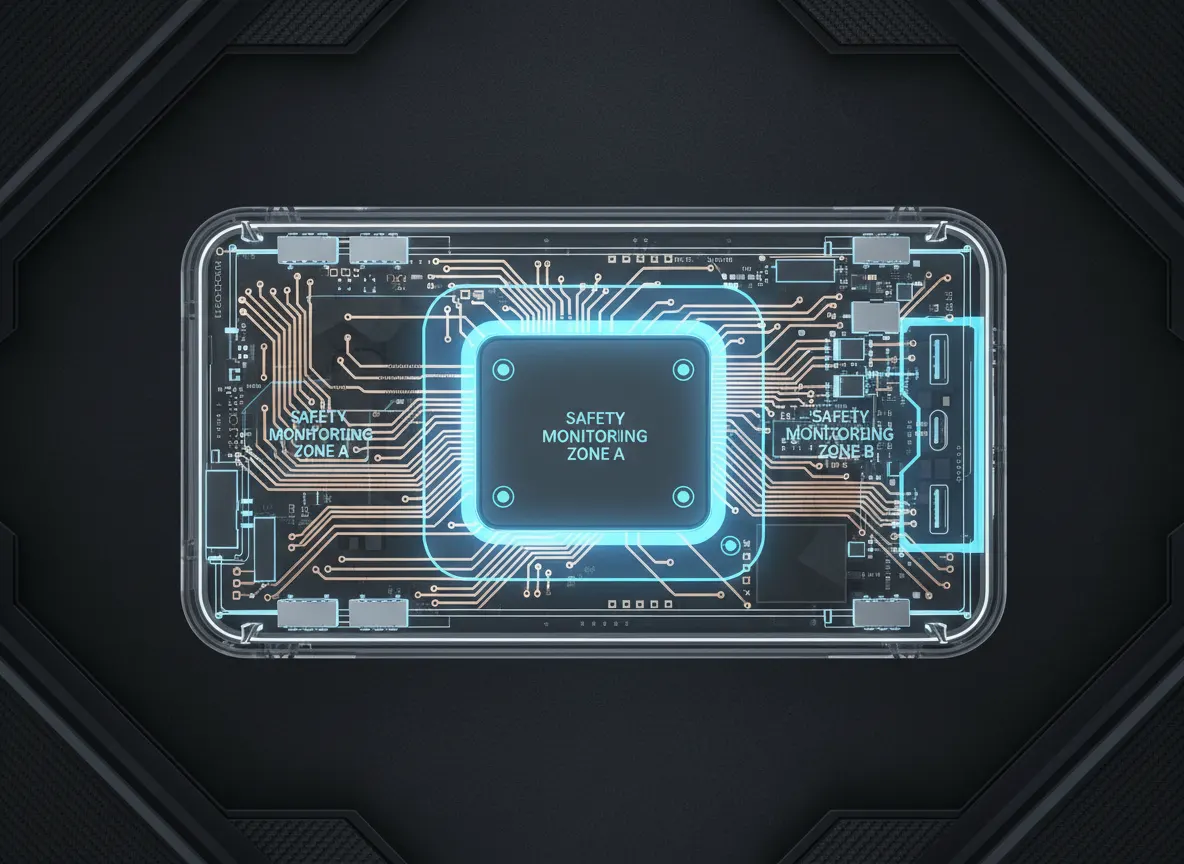
ActiveShield 2.0 prevents overcharging and device damage
Overcharging is the silent killer of battery longevity. ActiveShield 2.0 is a multi-layer safety architecture that monitors voltage, current, and temperature across all three simultaneous charging ports in real time, shutting down or throttling power the instant it detects a risk condition.
This is why the PowerCore 24K is trusted by 200M+ customers globally — the safety system lets you charge overnight or in your bag without fear of damaging expensive devices.
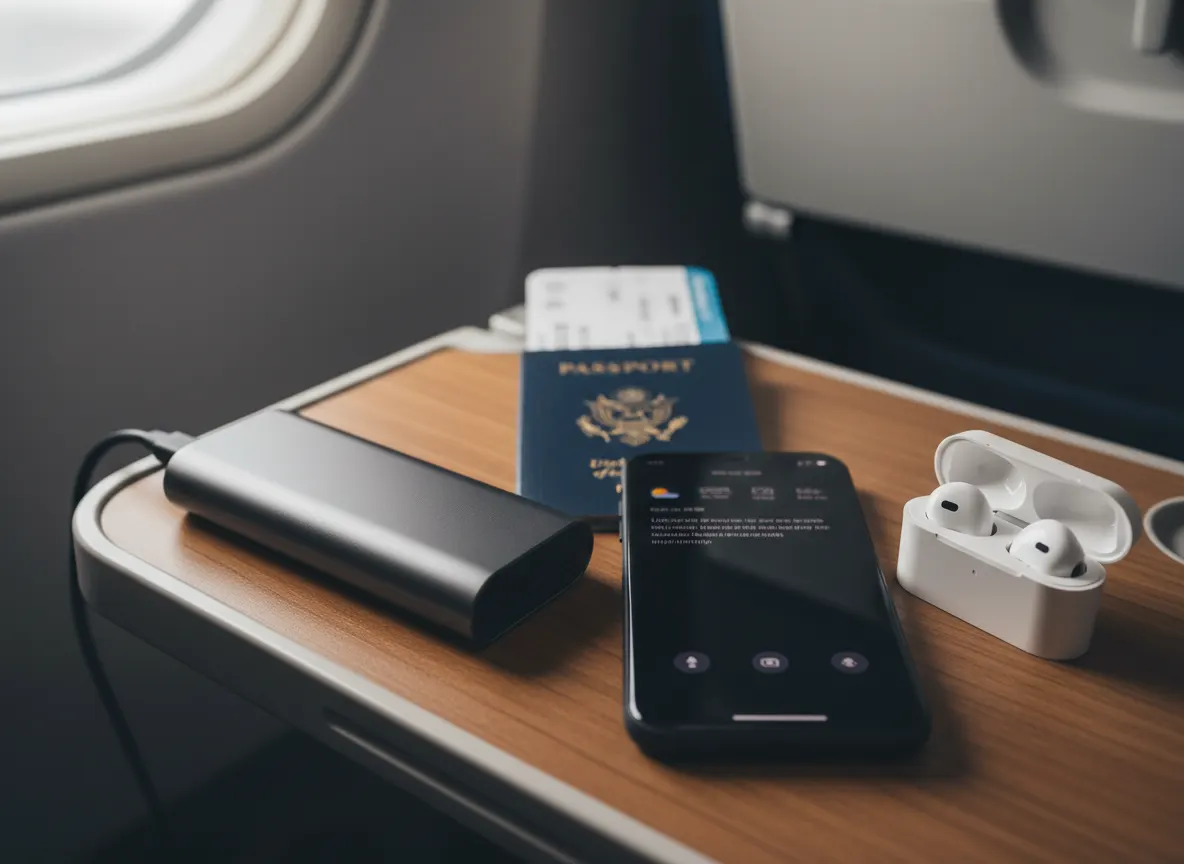
30-day guarantee and lifetime support from the #1 brand
The PowerCore 24K is backed by 14 years of charging innovation, available in 146 markets, and recognized as the world's No. 1 mobile charging brand by retail sales (2020–2024). That track record means your purchase includes a 30-day money-back guarantee and lifetime customer support — not a warranty period that expires.
You're not betting on an unknown brand; you're buying from the company that defines the category.
What Power Users Are Reporting
Questions You're Already Asking