Most vloggers are carrying too much camera — and it's killing the moment
Mirrorless bodies promise cinematic footage, but the gimbal rig required to deliver it turns every shoot into a production. There's a better path to stabilization — and it fits in one hand.
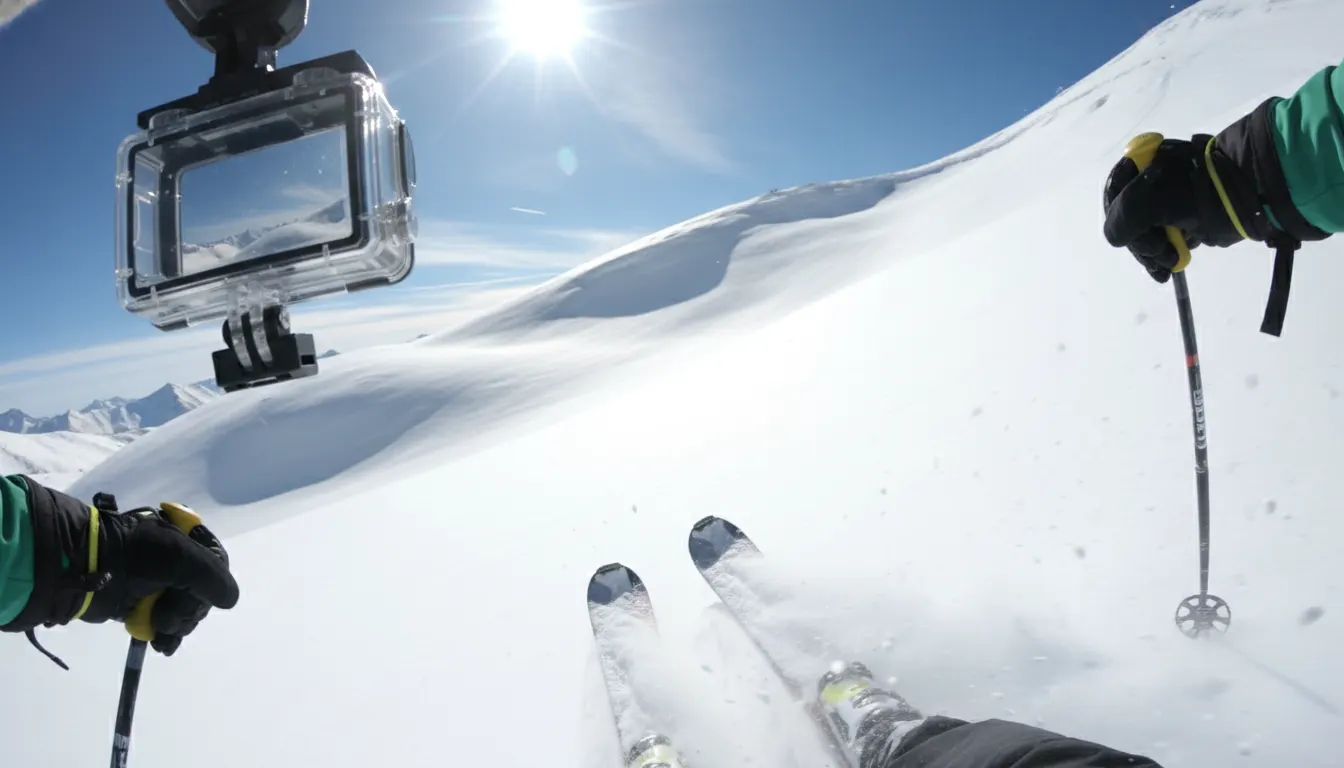
The problem isn't your mirrorless camera. It's everything you have to attach to it to make it work in the field.
You bought the body for image quality. Then you learned the internal stabilization couldn't handle real movement — skiing, biking, anything faster than a slow walk. So you added a gimbal. Then a second battery for the gimbal. Then a mount system. Then a backpack that fits the rig. Now you're carrying five pounds of gear to capture a 30-second clip, and you need both hands free just to frame the shot.
The footage looks professional. The process feels like a film crew showed up to document your life.
Meanwhile, the moment you wanted to capture — the spontaneous turn down an untracked line, the reaction shot mid-ride, the perspective only you could see — is gone. You were too busy managing the rig to stay present in the experience.
Professional-grade stabilization without the gimbal setup has been the category's unfilled promise for years. Brands kept delivering incremental improvements to internal stabilization that still couldn't match what a three-axis gimbal could do. The choice remained binary: carry the rig or accept mediocre footage.
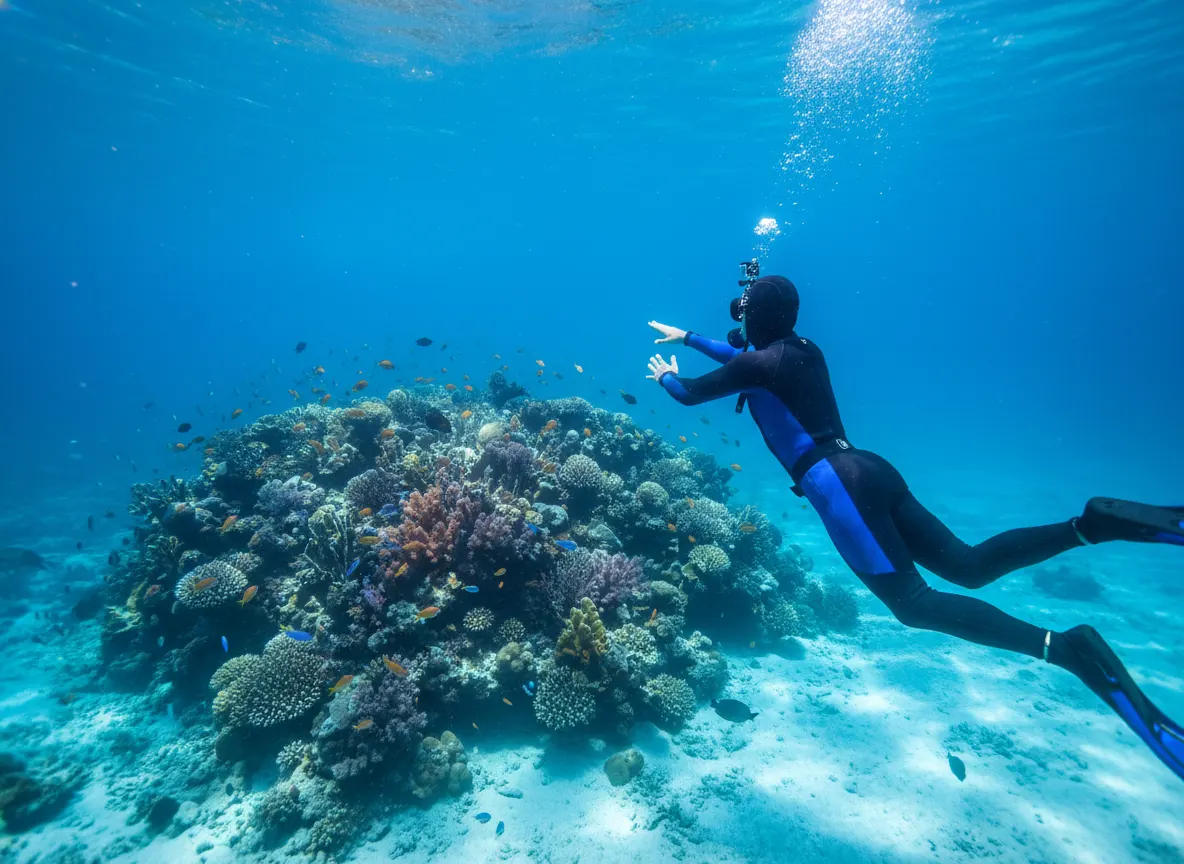
Picture the vlogger moment that actually matters: you're halfway down a backcountry line, or 40 feet underwater framing a reef shot, or leaning into a corner on a mountain road with one hand on the throttle. You need the camera centered on you without thinking about it. You need your hands free. You need a screen you can see in direct sunlight to confirm the framing is locked.
Mirrorless with a gimbal forces an impossible trade. The gimbal delivers the stabilization — smooth horizon, no micro-jitter, professional motion — but it requires two hands, constant rebalancing, and a setup process that turns every location into a mini-production. Internal stabilization frees your hands but introduces the wobble and tilt that marks footage as amateur the moment you start moving.
The dream is simple: capture that moment with one device, one hand, stabilization that holds a horizon through real movement, and a viewfinder bright enough to see what you're actually recording. No gimbal. No rig. No choosing between spontaneity and quality.
For years, that dream required accepting a compromise somewhere — form factor, battery life, color depth, or stabilization performance. One of those four always gave.
The Engineering That Makes Compact Stabilization Work
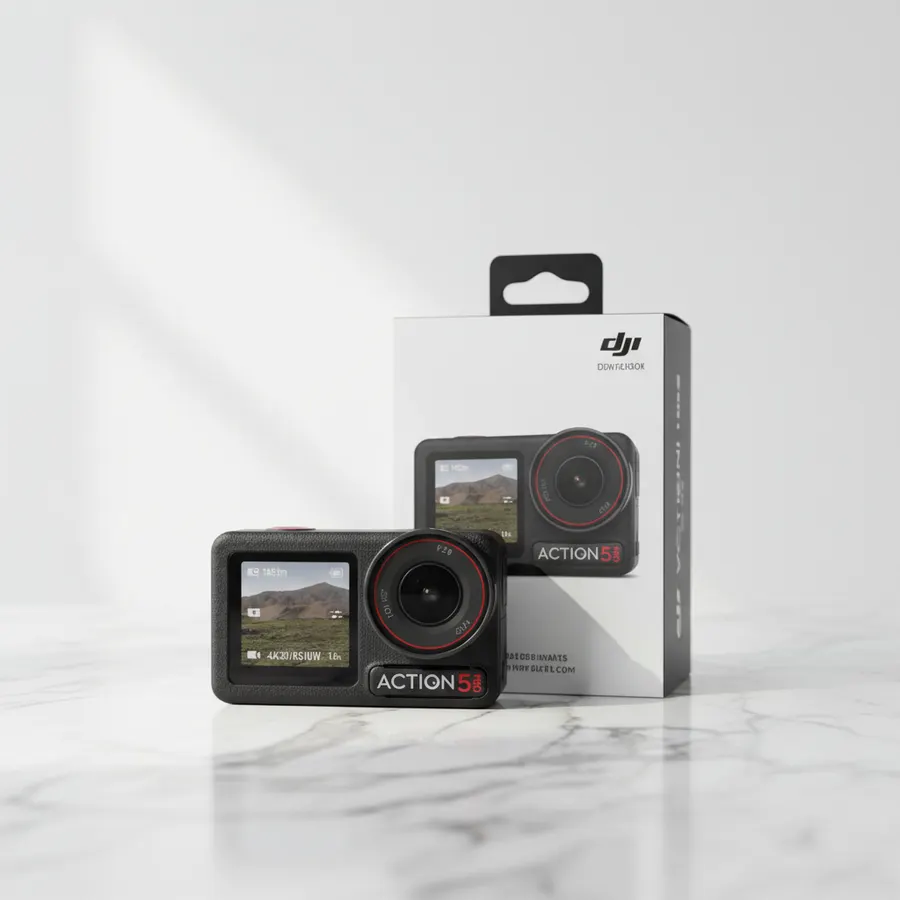
RockSteady 3.0 is the named alternative to gimbal-based stabilization. Instead of mounting the camera on a three-axis mechanical rig, the system uses sensor-level image processing paired with gyroscopic motion prediction to correct micro-movements and horizon drift in real time.
The mechanic works like this: a 1/1.3-inch CMOS sensor with 2.4μm pixel size captures 13.5 stops of dynamic range — 1.5 stops higher than the previous generation. That extra latitude gives the processing engine room to crop and stabilize the frame without losing detail in shadows or highlights. The gyroscope predicts the camera's next position 240 times per second, letting the processor shift the active image area before the shake registers.
360° HorizonSteady extends the correction to full rotational tilt. If you roll the camera 90 degrees mid-shot — switching from landscape to portrait while skiing, or flipping orientation underwater — the horizon stays level in the frame. The system tracks the intended horizon line and counteracts the roll independently of pitch and yaw.
Subject Tracking adds a third layer: once you frame yourself in the shot, the camera keeps you centered as you move through the frame. No manual panning. No post-production reframing. The processor identifies the subject, predicts movement direction, and shifts the stabilized crop window to follow.
This is the engineering choice that makes a compact form factor viable for professional work. The stabilization performance that previously required a gimbal rig now happens inside a device you can operate with one hand. The trade-off is processing overhead — RockSteady 3.0 requires computational power that eats battery faster than passive recording. The Osmo Action 5 Pro addresses that with a 240-minute max runtime at 25°C, 50% longer than the Action 4.
The sensor size and color depth complete the professional-grade spec stack. 10-bit D-Log M and HLG color modes preserve enough tonal information for serious color grading in post. That's the feature set mirrorless shooters expect when they're deciding whether a compact body can replace their primary camera for field work.
How RockSteady 3.0 Eliminates Gimbal Dependency
Four Reasons Compact Stabilization Replaces the Gimbal
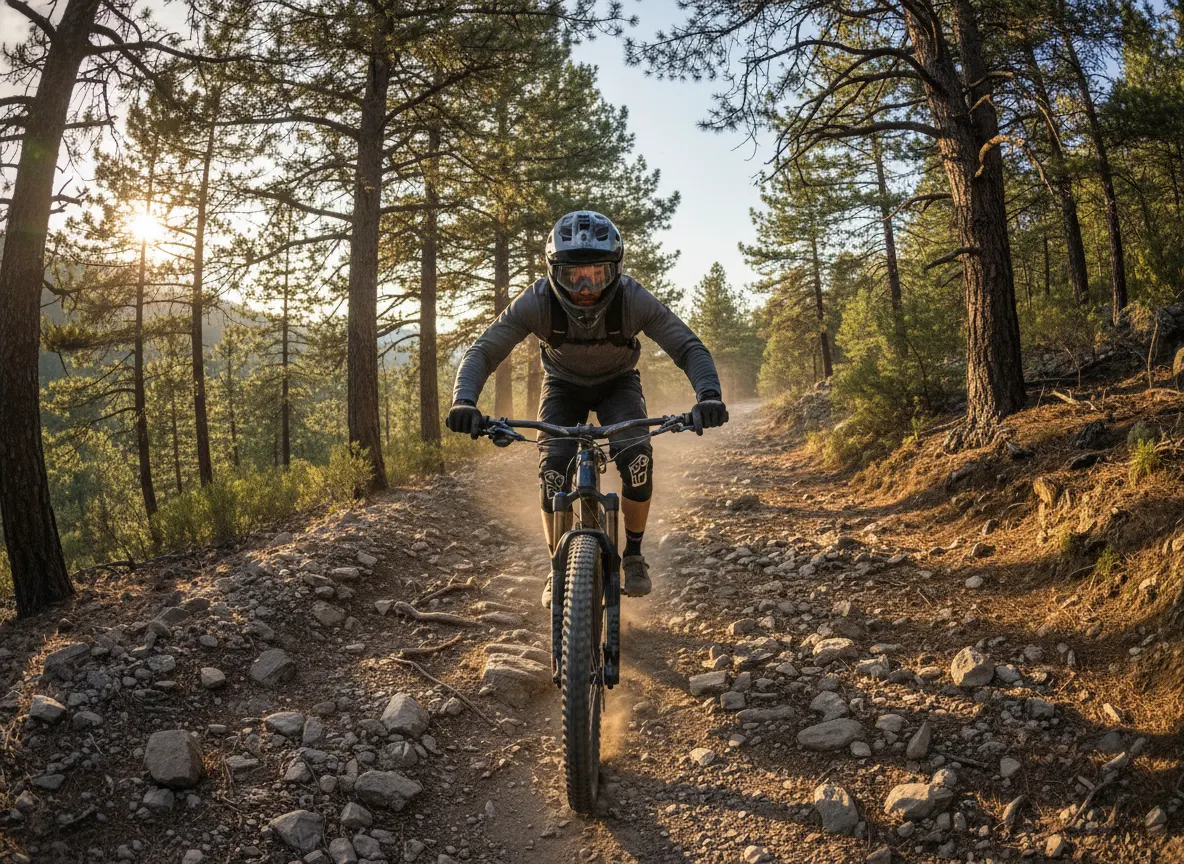
RockSteady 3.0 + Subject Tracking replaces gimbal weight
RockSteady 3.0 stabilization combined with Subject Tracking keeps your subject centered and level without requiring a separate gimbal rig. The camera reads your movement and your subject's movement in real time, then compensates electronically -- meaning you get gimbal-level footage from a device that fits in a pocket.
For vloggers transitioning from mirrorless, this is the engineering trade that kills the need to carry dual rigs: compact camera + gimbal becomes one integrated unit.

1/1.3 inch sensor with 2.4μm pixels captures detail in motion
The sensor in the Action 5 Pro is 1/1.3 inches with 2.4μm pixel size -- substantially larger than previous compact action cameras. Larger pixels gather more light per frame, which means slower shutter speeds work in dim conditions and motion blur stays minimal even in fast-paced sports.
This is the hardware reason why skiers and motorcycle riders get sharp, detailed footage even when sunlight is low or the action is chaotic.
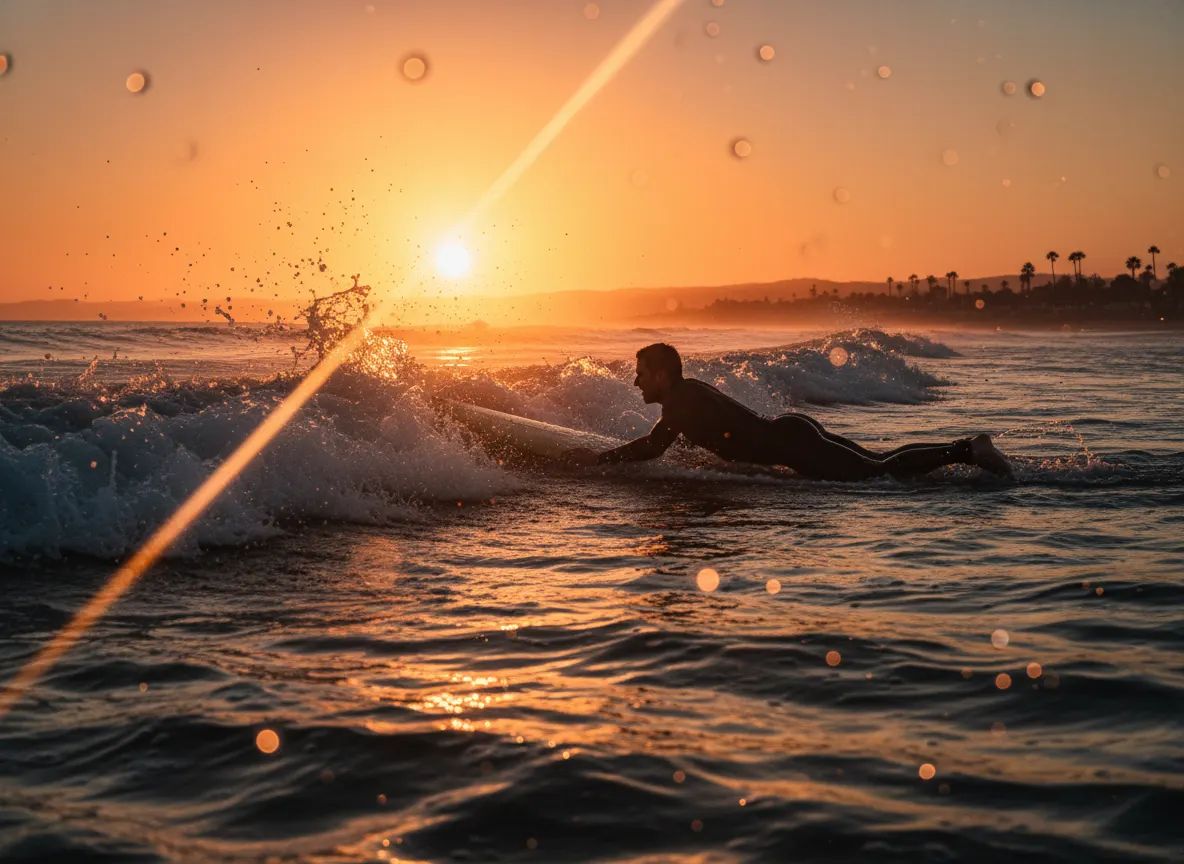
13.5 stops dynamic range holds detail in extreme light
Dynamic range is the gap between the brightest and darkest tones a sensor can capture in a single frame. At 13.5 stops, the Action 5 Pro captures 1.5 stops more than the Action 4 -- which means backlighting, snow glare, and underwater sunlight don't blow out your shot or crush the shadows into sludge.
For divers and high-altitude athletes, this is the spec that keeps foreground and background detail when the sun is directly involved in your composition.
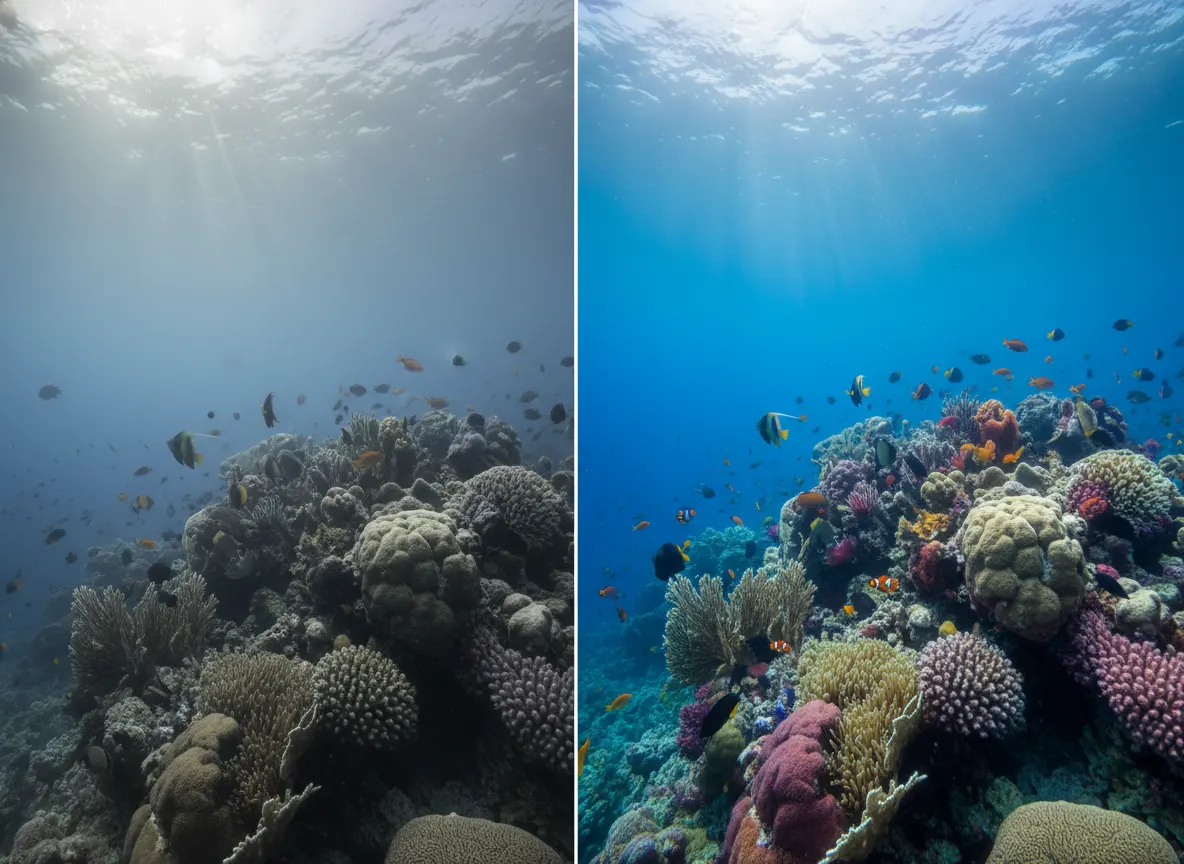
10-bit D-Log M and HLG color modes give post-production control
Most action cameras lock you into a single color profile. The Action 5 Pro records in both 10-bit D-Log M and HLG, which means you shoot flat, desaturated footage that preserves all the color and tonal information captured by the sensor.
In post, you have the latitude to grade, match other cameras, or push the look in any direction without posterization or banding -- the same creative control vloggers expect from mirrorless systems, now in a compact format.
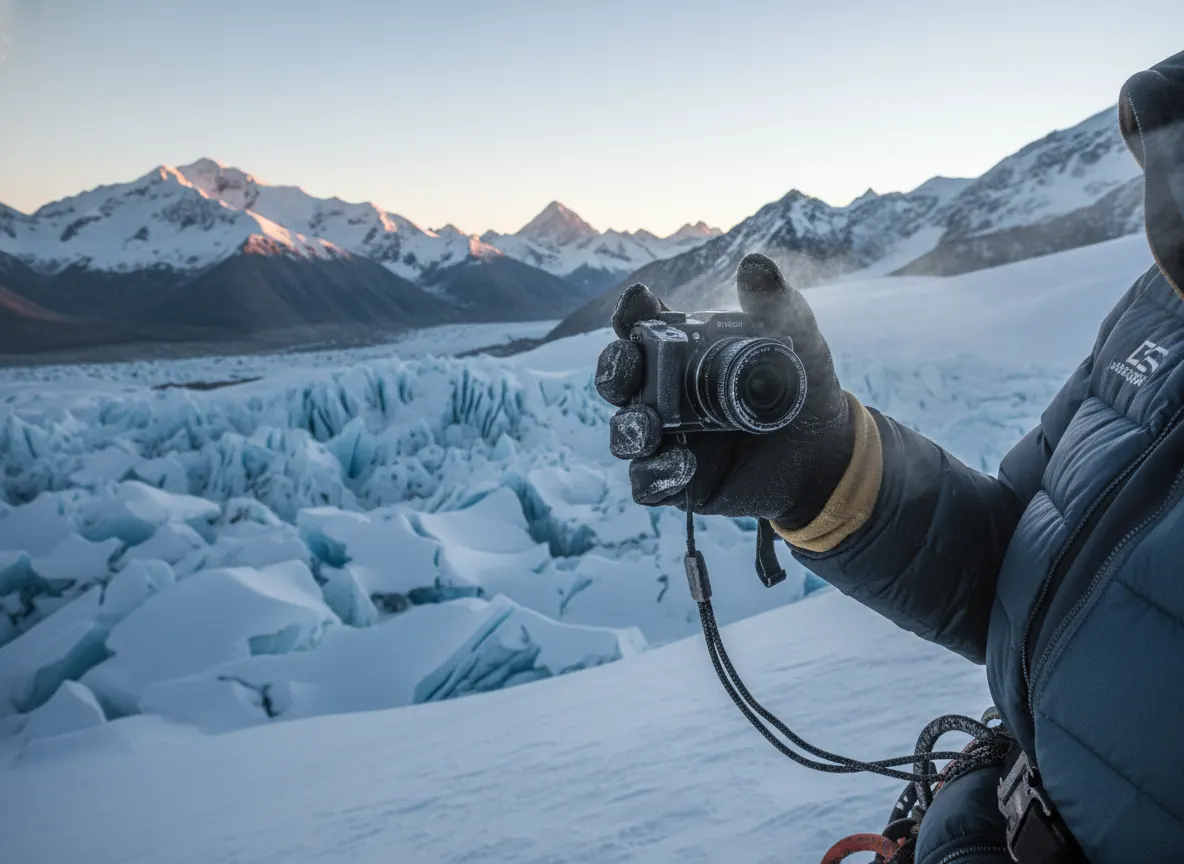
240 minutes battery at 25°C, 3.6 hours in -20°C cold
The Action 5 Pro runs up to 4 hours (240 minutes) at room temperature -- a 50% improvement over the previous generation. Even in extreme cold (-20°C), it delivers 3.6 hours of continuous recording, which is critical for high-altitude mountaineers and arctic explorers where temperature saps lithium cells faster than anywhere else.
This spec matters because it's tested and named; most competitors ship vague "up to" claims that vanish in real conditions. You know exactly what you're carrying into the field.
Your First Week with RockSteady 3.0
Mirrorless + Gimbal vs. Integrated Stabilization
- Gimbal adds 1-2 lbs and requires separate battery management -- defeats portability
- Three separate devices to charge, calibrate, and troubleshoot in the field
- 8-bit standard color limits color grading flexibility and post-production latitude
- Gimbal drift and motor lag introduce micro-stutters during dynamic movement
- Screen glare in bright daylight forces you to shade the camera to see footage
- Subject tracking requires manual gimbal recalibration between takes
- RockSteady 3.0 + 360° HorizonSteady built-in -- no gimbal weight penalty
- One device, one battery system: 4-hour runtime eliminates mid-day power swaps
- 10-bit D-Log M and HLG color modes deliver broadcast-grade post-production control
- Hardware stabilization locks movement before compression -- no interpolation artifacts
- Dual OLED high-brightness screens cut glare and let you frame shots in direct sunlight
- Subject Tracking centers you automatically without gimbal recalibration or setup
FAQs: What Vloggers Need to Know
Guaranteed